Most city building games force you to choose: pay upfront, download heavy clients, or settle for flat 2D visuals. But what if you want depth, freedom, and immersive 3D environments—all without spending a dime or installing software? That’s where free online 3D city building games come in. These browser-based simulations deliver spatial realism, intuitive design, and real urban planning mechanics without locking you behind a paywall.
Forget outdated Flash games or clunky interfaces. Modern 3D city builders run smoothly in Chrome, Firefox, and Edge, using WebGL and HTML5 to render dynamic skylines, traffic systems, and environmental effects. Whether you're sketching out your first suburb or managing a high-density metropolis, the right game offers both creative control and strategic depth.
Below, we explore the best free 3D city building games available to play online—no installation, no subscription, no hassle.
Why Play 3D City Building Games in Your Browser?
3D city builders stand apart from their 2D counterparts by offering spatial awareness, realistic zoning, and better visual feedback. When these games run in-browser, they remove friction: no gigabytes of downloads, no compatibility issues, no intrusive ads (in most cases), and instant access from any device.
But not all browser-based 3D games are created equal. The best ones balance:
- Smooth performance across mid-tier hardware
- Intuitive drag-and-drop or click-to-build mechanics
- Realistic city systems (traffic, pollution, power, water)
- Visual depth and camera control (pan, zoom, rotate)
The rise of cloud-powered rendering and optimized game engines like Babylon.js and PlayCanvas has made this possible. Today’s best titles feel less like tech demos and more like full-fledged urban sandboxes.
Top 5 Free Online 3D City Building Games
Here are the most polished, functional, and genuinely free 3D city building games you can play right now in your browser:
1. Cityscape Simulator Developed by PixelLands Studio
A standout for visual fidelity and smooth controls, Cityscape Simulator lets you build sprawling cities with real-time lighting, day-night cycles, and zoning layers. You can rotate the camera freely, place roads in curves, and watch traffic flow dynamically.
Key Features: - Realistic zoning: residential, commercial, industrial - Environmental simulation (pollution spreads, green zones help) - Export city snapshots as 3D thumbnails - Works on laptops with integrated graphics
Limitation: Limited public sharing—no multiplayer or leaderboards.
Tip: Start with low density. Early-game budget constraints make overbuilding a common beginner mistake.
2. Urbanize.io Community-driven city builder

Urbanize.io thrives on simplicity and speed. Games load in under 10 seconds, and the interface feels like a stripped-down version of Cities: Skylines—but in your browser. The 3D engine uses efficient mesh rendering, so even older machines handle it well.
What Works: - One-click road placement with adaptive intersections - Dynamic tax sliders to balance income and growth - Real-time population counter and happiness meter
Drawback: No natural disasters or mod support.
Use Case: Great for quick 20-minute sessions or teaching urban planning basics to students.
3. SimMeria 3D Educational focus with depth
SimMeria 3D was originally built for high school geography programs, but it’s robust enough for serious players. It includes public transit planning, emergency services, and detailed budget reports—all in clean, modern 3D.
Strengths: - Budget management with granular expense tracking - Transit layer: buses, subways, bike lanes - Scenario mode (e.g., “Grow a city from 10k to 1M in 30 years”)
Limitation: Free version locks advanced features like airports and high-speed rail behind a school license (not for individuals).
Workflow Tip: Use scenario mode to test policy changes—like raising taxes or cutting park budgets—before applying them in free build.
4. BuildAmetropolis.com Experimental but playable
Don’t let the generic domain fool you. BuildAmetropolis.com uses a voxel-style 3D engine similar to early Minecraft. You place buildings as blocks, adjust height limits, and watch your city grow vertically.
Notable For: - Vertical density: skyscrapers stack naturally - Creative mode with unlimited funds - No loading screens between actions
Downsides: Minimal UI, no tutorial, and occasional lag with >500 buildings.
Common Mistake: Placing too many high-rises too early. Without adequate power and water infrastructure, your city collapses from overload.
5. TerraCity 3D Emerging contender with terrain tools
TerraCity 3D stands out with terrain sculpting. You can raise mountains, dig canals, and place cities on cliffs or islands—rare in browser-based games. The 3D rendering is smooth, and the camera orbits like a mini CAD tool.
Pros: - Terrain deformation tools (raise, lower, smooth) - Water simulation: rivers flow downhill realistically - Export maps as heightmaps (useful for modders)
Cons: Smaller community, fewer tutorials.
Practical Example: Build a coastal city with a port district on reclaimed land—then watch how tides and erosion affect long-term stability.
How to Choose the Right Game for Your Needs
Not every 3D city builder suits every player. Match the game to your goals:
| If You Want… | Try This Game |
|---|---|
| Visual realism & lighting | Cityscape Simulator |
| Fast-paced design | Urbanize.io |
| Educational depth | SimMeria 3D |
| Creative freedom & height | BuildAmetropolis.com |
| Terrain control | TerraCity 3D |
Ask yourself: - Do I need detailed budgeting? - Am I building for realism or fun? - Will I play on a Chromebook or tablet?
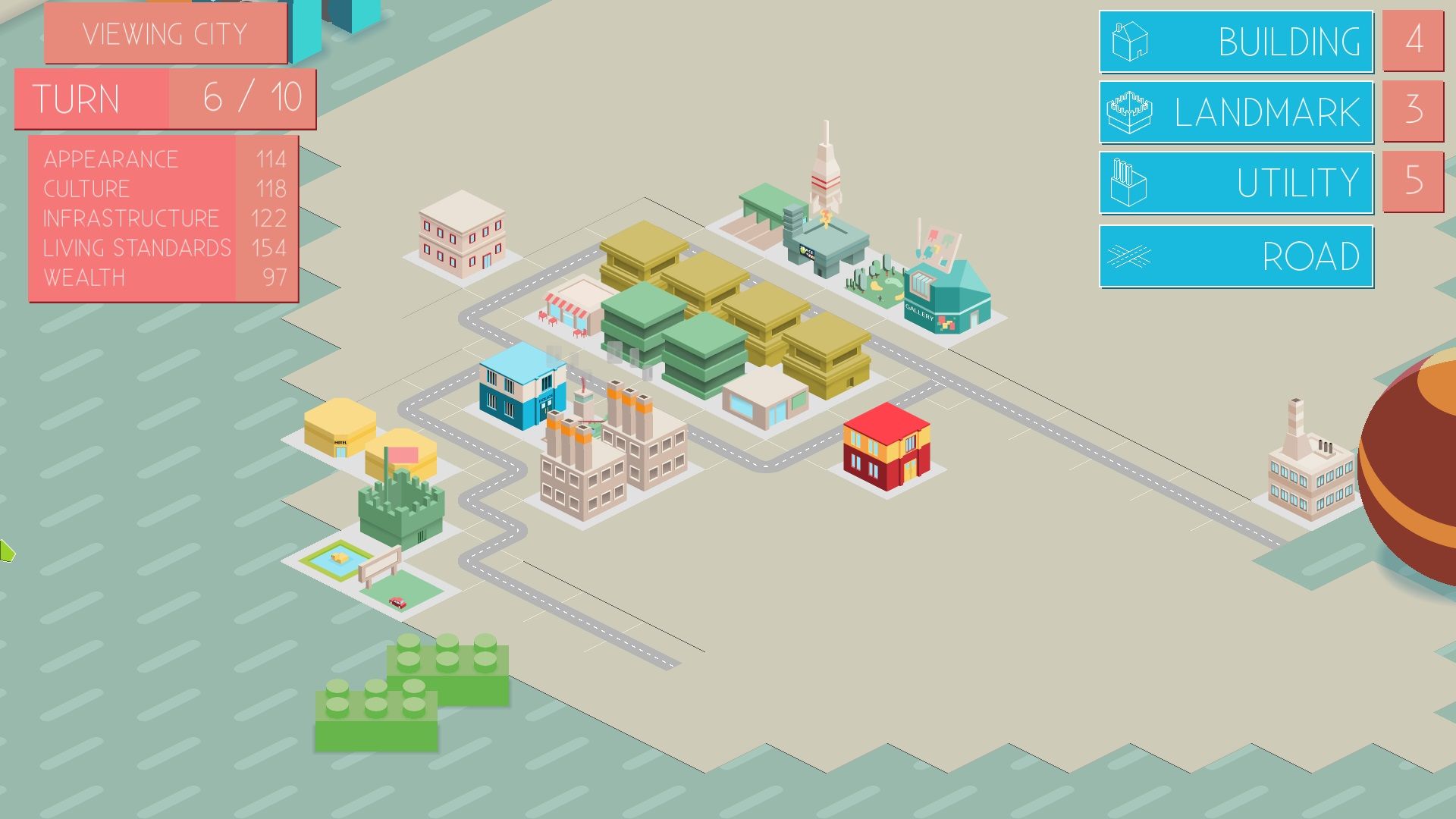
For casual players, Urbanize.io or Cityscape Simulator offer the smoothest entry. For tinkerers and planners, SimMeria 3D and TerraCity 3D provide deeper systems.
Common Pitfalls in Free 3D City Builders
Even experienced players make mistakes when jumping into browser-based 3D games. Here are the top issues—and how to avoid them:
- Overbuilding Early: Unlocking skyscrapers doesn’t mean you should use them. Start with low-density zones and expand as services catch up.
- Ignoring Traffic Flow: One major road won’t cut it. Use grid patterns or ring-spoke designs early.
- Neglecting Utilities: Power and water pipes don’t auto-connect. You must manually extend them to new zones.
- Camera Confusion: In 3D space, it’s easy to misplace buildings. Use the top-down grid toggle (if available) for precision.
- Assuming Offline Saves: Most browser games save only in local storage. Clear your cache, lose your city. Export or screenshot progress often.
Pro Insight: Use bookmarks. Many of these games encode your city state in the URL. Copy it after major milestones.
Limitations of Free Browser-Based 3D Games
Let’s be honest: these aren’t Cities: Skylines. They come with trade-offs:
- No mod support: Can’t import custom buildings or maps.
- Smaller map sizes: Most cap at 8x8 km or less.
- Limited AI simulation: Citizens are abstracted, not individual agents.
- No multiplayer: You build alone.
But that’s the point. These games prioritize accessibility. They’re not replacements—they’re gateways. For under 5 minutes of setup, you get a functional 3D city that teaches real planning principles.
And unlike mobile clones, they don’t push in-app purchases every two clicks. The best ones are ad-supported with optional donations—non-intrusive if you avoid peak hours.
Workflow Tips for Better Cities
Maximize your play sessions with these proven strategies:
- Start with a master plan: Sketch a rough layout (residential west, industrial east) before placing roads.
- Use layers: Toggle power, water, and transit overlays to spot gaps.
- Zone incrementally: Expand one district at a time to manage budgets.
- Rotate often: View your city from multiple angles to catch design flaws.
- Save progress externally: Take screenshots or copy save URLs.
A 15-minute session with focus beats an hour of aimless building.
Final Thoughts: Play Now, Plan Better
Free online 3D city building games aren’t just time killers. They’re tools for learning spatial design, systems thinking, and resource management. The best ones balance visual immersion with functional gameplay—all without asking for a credit card.
You don’t need a gaming PC or 50 hours to get started. Open a tab, pick one of the games above, and in under a minute, you’ll be laying down your first road, watching 3D traffic emerge, and feeling that quiet satisfaction of a city coming to life.
Start small. Build smart. And let your skyline rise—one block at a time.
Frequently Asked Questions
Are these games truly free? Yes. All listed games are free to play without mandatory payments. Some include optional donations or non-intrusive ads.
Do I need to install anything? No. These are browser-based—just open the site and play. WebGL must be enabled (it usually is by default).
Can I play on a tablet or Chromebook? Most work on tablets with mouse or touch support. Chromebooks handle them well if running recent Chrome OS.
Do they save my progress? Some use browser storage or URL-based saves. Always note your city link or take screenshots.
Is there multiplayer? Currently, no. All are single-player experiences.
Why don’t these games have more content? Developers balance performance and load times. More content means heavier downloads—defeating the purpose of instant access.
Can I export or share my city? A few (like Cityscape Simulator and TerraCity 3D) let you export images or save links. Check each game’s settings.
FAQ
What should you look for in Best Free Online 3D City Building Games You Can Play Now? Focus on relevance, practical value, and how well the solution matches real user intent.
Is Best Free Online 3D City Building Games You Can Play Now suitable for beginners? That depends on the workflow, but a clear step-by-step approach usually makes it easier to start.
How do you compare options around Best Free Online 3D City Building Games You Can Play Now? Compare features, trust signals, limitations, pricing, and ease of implementation.
What mistakes should you avoid? Avoid generic choices, weak validation, and decisions based only on marketing claims.
What is the next best step? Shortlist the most relevant options, validate them quickly, and refine from real-world results.